

Whenever I sit with e-commerce founders, I notice something interesting.
They have plenty of data dashboards, marketplace reports, ad summaries, payment statements but very little clarity.
When I ask, “So how much cash did you really make last month?” the room goes silent.
It’s not because they don’t know their business. It’s because they’re looking at too many numbers and too few insights.
That’s where a good E-commerce MIS changes everything.
It’s not about more reports. It’s about asking the right questions and seeing what’s really happening behind those big sales numbers.
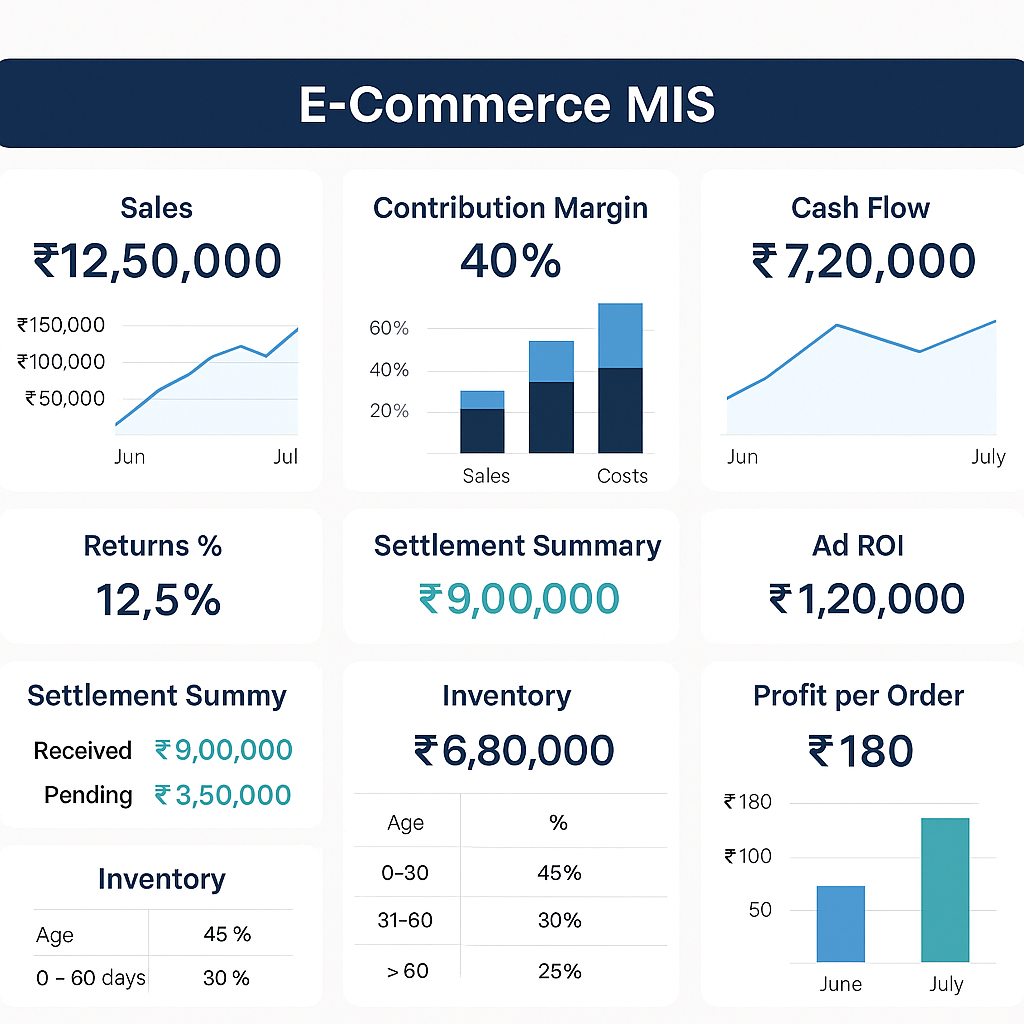
Here’s what I’ve learned working as a Virtual CFO with online businesses the seven reports that truly help founders make better decisions, not just track activity.
1️⃣ Sales That Tell the Truth
Your total sales number doesn’t mean much unless you know where it came from and what’s left after costs.
One client of mine was proud of crossing ₹1 crore in monthly sales. But when we broke it down, 60% came from a marketplace with high fees and return rates.
Their Online store smaller in volume was actually 18% more profitable.
That’s why I always say: track contribution margin, not just revenue.
2️⃣ Cash That’s Still Floating
In e-commerce, sales don’t mean cash. Payment gateways, COD, and refunds delay actual inflows.
A founder I worked with once found ₹25 lakh stuck between gateways and courier COD settlements — no fraud, just poor tracking.
We built a weekly settlement MIS, and suddenly, his bank balance started matching his confidence.
Cash flow clarity changes everything.
3️⃣ Returns and Refunds The Quiet Cash Drain
Every return eats into your time and liquidity.
One apparel brand I advised discovered that a single fabric type had 27% return rate. We tweaked the product photo, size chart, and listing. The next month, returns dropped to 14%.
Sometimes fixing cash flow doesn’t need more sales — it needs fewer mistakes.
4️⃣ Ads That Bring Cash, Not Just Clicks
Ad dashboards show beautiful graphs — but they rarely show cash reality.
One client was spending ₹8 lakh a month on Meta ads. Looked great on paper, but after fees, returns, and delays, actual cash profit was ₹80,000.
That’s why your MIS should connect ad spend with real collections, not just conversions.
5️⃣ The Fee Trap Hidden Platform Deductions
Small commissions and fees can silently eat 10–12% of your revenue.
When we finally reviewed all deductions for one client, it turned out ₹3.5 lakh a month was going into platform charges that nobody noticed.
That discovery alone gave them a reason to reprice and regain lost margin.
6️⃣ Stock That’s Not Moving
I call it “frozen money.”
You see it as inventory; I see it as cash that can’t breathe.
A beauty brand I worked with had ₹40 lakh stuck in slow-moving SKUs. We ran an ageing report, cleared the dead stock with a discount campaign, and recovered liquidity within weeks.
Lesson? Dead stock kills faster than bad sales.
7️⃣ Profit Per Product — The Real Scorecard
Many founders celebrate sales milestones. But the truth lies in unit economics — how much money each order actually brings home.
One founder proudly said, “We make ₹200 per order.”
After adding ad cost, packaging, and returns, the real number was ₹47. That one report completely changed how they approached pricing and promotions.
🧾Final Thought
An E-commerce MIS isn’t about tracking everything.
It’s about seeing clearly —
Where your cash is,
What’s making money,
And what’s quietly leaking it.
When you start reviewing these seven reports monthly, your decisions become calmer, sharper, and faster.
You stop reacting. You start leading.
And that’s when business becomes enjoyable again — not just stressful.
LinkedIn Link : RMPS Profile
This article is only a knowledge-sharing initiative and is based on the Relevant Provisions as applicable and as per the information existing at the time of the preparation. In no event, RMPS & Co. or the Author or any other persons be liable for any direct and indirect result from this Article or any inadvertent omission of the provisions, update, etc if any.


Published on: October 11, 2025