
Starting startups in India is like planting a seed, you have got the ideas, the drive, and the vision, but you also need the right conditions to grow. In the first few years, every rupee matters, and heavy taxes on income can feel like a burden.
The good news? The Government of India is stepping in to help. Through a range of tax benefits for startups, it’s giving new businesses the breathing space they need to innovate, hire, and scale. In this guide, we explain what these benefits are, show you who can apply, outline the eligibility rules, and walk you through the steps to get recognised.
What Are the Tax Benefits for Startups?
The government offers four key tax benefits for eligible DPIIT-recognised startups in India, which are as follows: –
3-Year Tax Holiday (Section 80-IAC)
Eligible startups can enjoy a 100% income tax exemption for any 3 consecutive financial years out of their first 10 years from incorporation. This allows entrepreneurs to choose the most profitable years to claim the benefit and save maximum tax.
Example:
You register your startup in 2023. You start making good profits from 2026. You can choose 2026–27 as the first year of your 3-year tax holiday, which means you won’t pay income tax for 2026–27, 2027–28, and 2028–29. This way, you use the benefit when it matters the most.
Exemption from Angel Tax (Section 56(2))
Normally, if a company issue shares at a price higher than their fair market value, the premium amount is taxed as income. DPIIT-recognised startups are exempt from this tax for funds raised from Indian resident investors, including angel investors. This means more of your funding stays in the business.
Example:
You issue shares with a face value of ₹100 at ₹1500 each, having FMV of ₹1000. The difference of ₹500 per share would normally be taxed as income. But due to exemption benefits, you need not to pay tax on that extra ₹500 per share.
Capital Gains Tax Exemption (Sections 54EE & 54GB)
If a startup earns capital gains by selling a long-term asset such as property or shares, it can avoid paying capital gains tax by investing that amount into a government notified fund within the specified time. This allows the startup to reinvest the money into its growth instead of losing part of it to taxes.
Example:
You sells an old office property in 2025 and makes ₹50 lakh in capital gains. If the startup invests that ₹50 lakh in an eligible government notified fund or purchase of any machinery or equipment within the allowed period, it will not have to pay capital gains tax on that amount.
Carry Forward of Losses
Usually, companies can carry forward business losses only if at least 51% of the original shareholders remain the same. Startups having benefits, they can carry forward losses even if shareholding changes, provided the shareholders from the previous year still hold some shares.
Example:
Your startup records a ₹10 lakh loss in 2024–25. In 2026, you raise funding and changed the shareholding pattern. If the original shareholders from 2024–25 still own some shares, you can carry that loss forward to offset future profits.
Who Can Apply for Tax Benefits?
Following entities can apply for tax benefits in India:
- Private Limited Companies (Companies Act, 2013)
- Limited Liability Partnerships (LLP Act, 2008)
- Registered Partnership Firms (Partnership Act, 1932)
Eligibility Criteria for Startups
To qualify for startup tax benefits, startup must:
✅ Be incorporated as a Private Limited Company, LLP, or Partnership Firm.
✅ Be not more than 10 years old from the date of incorporation.
✅ Have an annual turnover of less than ₹100 crore in any financial year.
✅ Work towards innovation, development, or improvement of products, services, or processes, or have a scalable business model with high potential for employment and wealth creation.
✅ Must not be formed by splitting up or reconstructing an existing business.
Application Process: Step-by-Step
To enjoy startup tax benefits, startup must first get DPIIT recognition and then apply for specific exemptions.
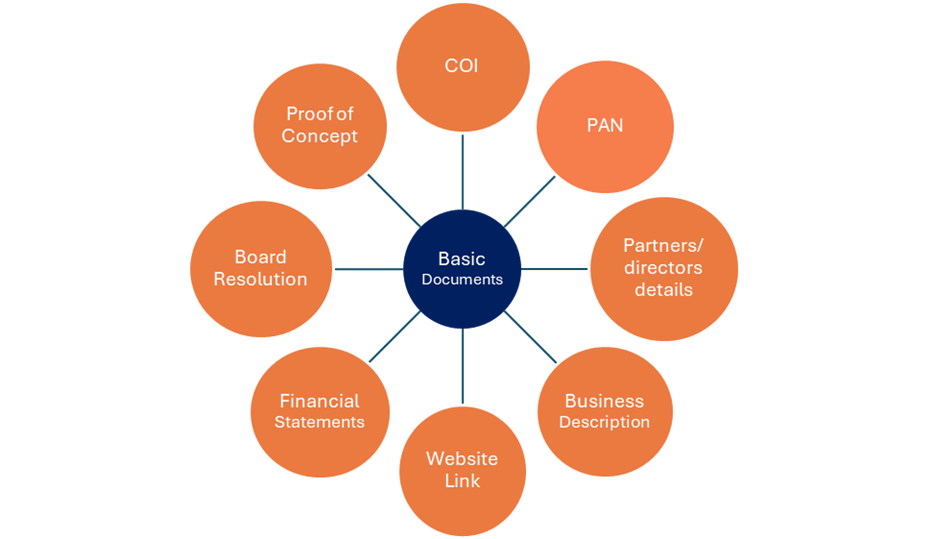
1: Prepare Your Documents
2: Register on the Startup India Portal
- Go to startupindia.gov.in
- Create an account
- Fill in basic startup details
3: Apply for DPIIT Recognition
- Login & Fill in:
- Entity details (type, incorporation date, CIN/LLPIN/Firm Reg. No.)
- Business description and innovation statement
- Industry category & proof of concept
- Upload documents required & submit the application.
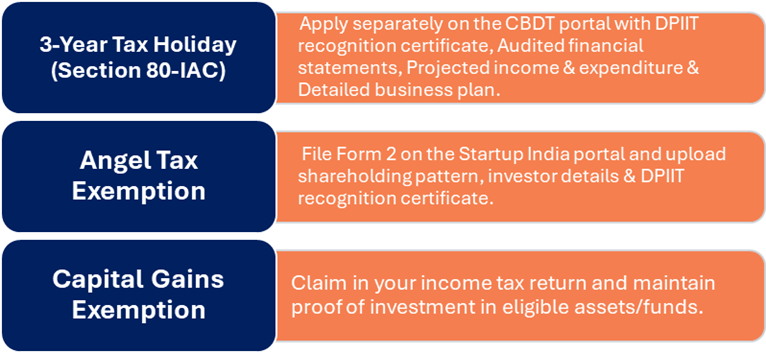
4: Apply for Tax Exemptions
- If approved, you get:
- DPIIT Recognition Number
- DPIIT Certificate
You can now apply for tax exemption.
Key Takeaways for Founders
- DPIIT recognition is the first step, without it you cannot claim most exemptions.
- Keep documents updated, authorities can review your eligibility anytime.
Running a startup is challenging, but these tax benefits can give you valuable breathing space. With DPIIT recognition and the right steps, you can save money in your early years and reinvest it into your product, your team, and your growth. So, get moving and get your startup registered to make the most of these tax benefits.
LinkedIn Link : RMPS Profile
This article is only a knowledge-sharing initiative and is based on the Relevant Provisions as applicable and as per the information existing at the time of the preparation. In no event, RMPS & Co. or the Author or any other persons be liable for any direct and indirect result from this Article or any inadvertent omission of the provisions, update, etc if any.


Published on: August 13, 2025